Patterns in Bonus Structures and Their Ties to Responsible Play Tools Across Mobile Swedish Platforms
Swedish mobile platforms operating under Spelinspektionen oversight display recurring patterns in how bonus structures align with responsible play tools, and these connections have grown more defined by September 2026. Data from licensed operators indicate that deposit-match bonuses and free-spin packages now routinely incorporate built-in limits on wager amounts and session durations, while self-exclusion functions activate automatically once certain play thresholds are reached.
Common Bonus Configurations on Regulated Mobile Apps
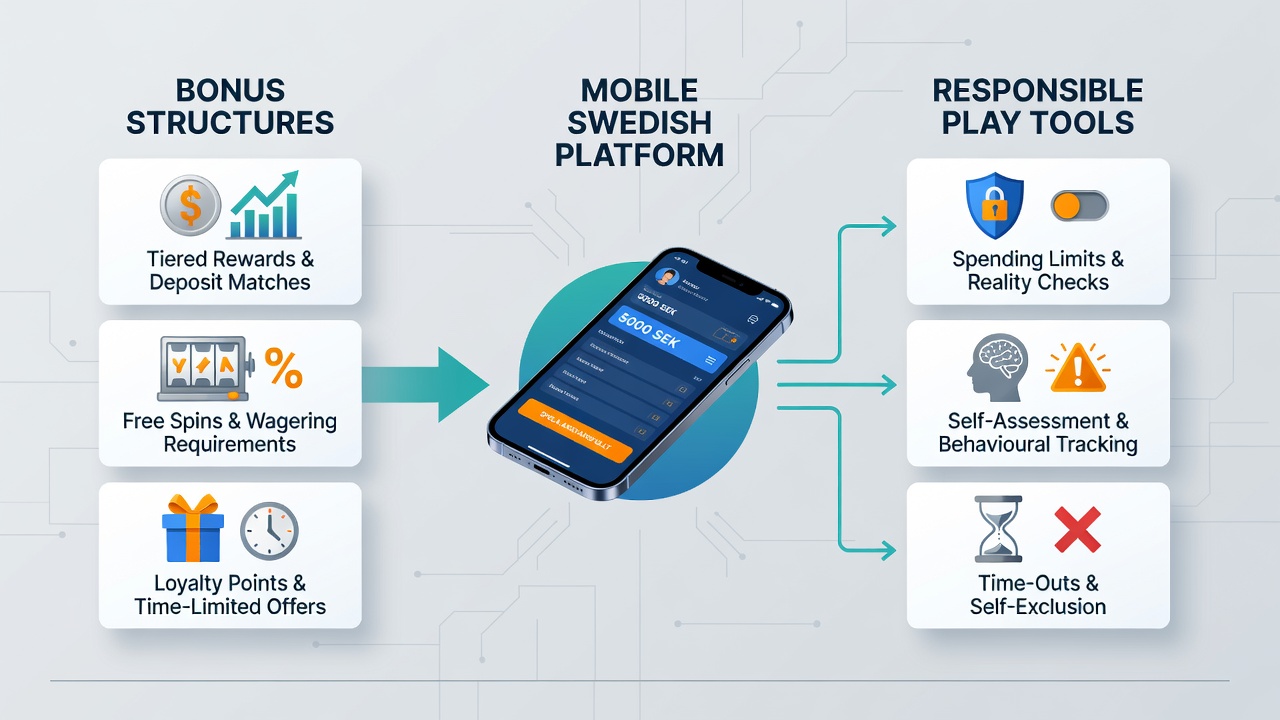
Operators structure welcome offers around percentage matches that cap at fixed euro amounts, and these caps often mirror the same numerical thresholds used for mandatory deposit-limit prompts during account setup. Free-spin allocations appear in bundles tied to specific game titles, yet the terms require players to confirm loss-limit settings before the spins activate, which creates an enforced checkpoint rather than an optional suggestion. Cashback promotions follow similar logic, returning a percentage of net losses only after the platform verifies that the user has reviewed their current responsible-gaming profile within the preceding seven days.
Integration Mechanisms Between Bonuses and Player-Protection Features
Technical integrations allow bonus eligibility to depend on whether a user has set daily, weekly or monthly spending caps, and the same database fields that track bonus wagering progress also feed into real-time alerts when those caps near their limits. When a player reaches eighty percent of a self-imposed deposit ceiling, the system suspends any active bonus rounds until the user either raises the limit through a verified process or pauses play entirely. Observers note that this dual-purpose data flow reduces the administrative steps required for compliance checks while maintaining continuous monitoring across iOS and Android sessions.
Observed Trends in 2026 Platform Updates
Platform releases throughout 2026 introduced modular bonus engines that let operators toggle responsible-play parameters without rebuilding entire promotional campaigns, and these updates coincided with revised Spelinspektionen guidelines on transparent wagering requirements. Figures released by the authority show an increase in the percentage of active accounts that combine at least one bonus with an active loss-limit setting, rising from forty-two percent in late 2025 to fifty-eight percent by early autumn 2026. The same reports document shorter average bonus lifespans on mobile devices compared with desktop, largely because session-time reminders interrupt extended play sequences more frequently on handheld screens.
Regulatory Data and Cross-Border Comparisons
According to records maintained by Spelinspektionen, bonus-related disputes declined by nineteen percent year-over-year through August 2026, a shift attributed in part to clearer linkage between promotional terms and mandatory responsible-play confirmations. A separate analysis published by the Australian Gambling Research Centre examined similar integration patterns in other licensed markets and found that synchronized data fields between bonuses and limit tools produce measurable reductions in self-reported overspending incidents. Swedish operators have adopted several of these documented approaches, adapting them to the national licensing framework that requires all promotional activity to remain within pre-approved responsible-gaming parameters.
Technical Implementation Across Device Types
Mobile applications transmit bonus-status packets alongside responsible-play telemetry in the same API call, which allows backend systems to enforce rules in real time without additional user prompts. Push-notification services deliver reminders about remaining wager requirements at the same intervals used for deposit-limit warnings, creating a unified communication stream rather than separate message threads. Developers report that this consolidated approach simplifies code maintenance while satisfying audit requirements that demand verifiable records of both bonus distribution and player-protection interventions.
Conclusion
Patterns emerging across Swedish mobile platforms illustrate a tightening relationship between bonus mechanics and responsible-play infrastructure, driven by regulatory expectations and technical efficiencies that were largely in place by September 2026. Continued monitoring of these linkages will depend on consistent data reporting from licensed operators and ongoing refinements to the shared systems that track both promotional activity and player safeguards.